- What's On Banff
- Posts
- Avalanche Risk Remains High Across the Bow Valley: What You Need to Know Before Heading Out
Avalanche Risk Remains High Across the Bow Valley: What You Need to Know Before Heading Out
🌟 What's On Banff - Events, Activities, Live Music & Good News! 😊

Kevin J
December 18, 2025
Winter in the Canadian Rockies is a magical time, drawing outdoor enthusiasts from all over the world to explore the dramatic landscapes of Banff, Canmore, and Kananaskis. But with heavy snowfalls and complex mountain conditions, this season also brings serious risks. Right now, avalanche danger is top of mind for safety experts across the Bow Valley, who are urging backcountry users to exercise extreme caution.
As of December 17, avalanche danger ratings were listed as high at all elevations in Kananaskis, and high in alpine and treeline terrain throughout Banff, Yoho, and Kootenay national parks. These ratings come in response to a major winter storm system that has delivered significant snowfall, particularly in upper elevations. For example, Bow Summit received 25 centimetres in just 24 hours - and more snow is on the way. Combined with strong south winds, these conditions are pushing the region's snowpack into highly unstable territory.
⛸️ Ice Skate on Lake Louise • ❄️ Johnston Canyon Icewalk • 🎒 Snowshoe Trails • 📸 Off-the-Radar Scenic Stops • 🚌 Hotel Pickup & Drop-off • 👣 Small Group Your ultimate winter day out. Book now! |  |
Understanding the Current Avalanche Conditions
According to bulletins from Kananaskis Mountain Rescue and Parks Canada, the primary concern right now is a persistent slab problem. Persistent slabs are layers of dense, heavy snow sitting on top of a weak, older layer - in this case, a crust from early November. These slabs, ranging from 20 to 100 cm in thickness, are releasing as slab avalanches up to size 3. Even more concerning, many of these slides are stepping down to the November crust layer, triggering deeper and more dangerous avalanches.
Public safety specialists are calling this a natural avalanche cycle, meaning avalanches are occurring without any human triggers. Explosive control work is also producing large slides, some as big as size 3.5, and in several cases, the debris is running far downslope, even into runout zones. The message from professionals is clear: avalanche terrain is unsafe right now, regardless of your experience or gear.
Avoid Avalanche Terrain - No Exceptions
"Stay out of all avalanche terrain" is the direct recommendation from both Kananaskis Mountain Rescue and Parks Canada. This includes slopes, gullies, bowls, and any areas with overhead hazard. Even if you're familiar with a certain route or have toured it in the past, current conditions make travel extremely risky. The added weight from new snow and wind-loading can trigger large and destructive slides, whether by natural causes or a single skier or hiker.
These warnings are not limited to advanced alpine objectives. Avalanche danger exists at lower elevations and on popular trails that may seem benign. If you're heading into the backcountry or thinking about venturing off-piste, consider postponing your trip. Stick to low-angle, low-risk areas or enjoy the snow within ski resort boundaries, where avalanche mitigation measures are in place.
🫧 Famous Ice Bubbles Up Close • 🏔️ Travel the Icefields Parkway • 📸 Peyto Lake Photo Stop • 🥾 Optional Snowshoe or Skating • 🚌 Small Group Tour | 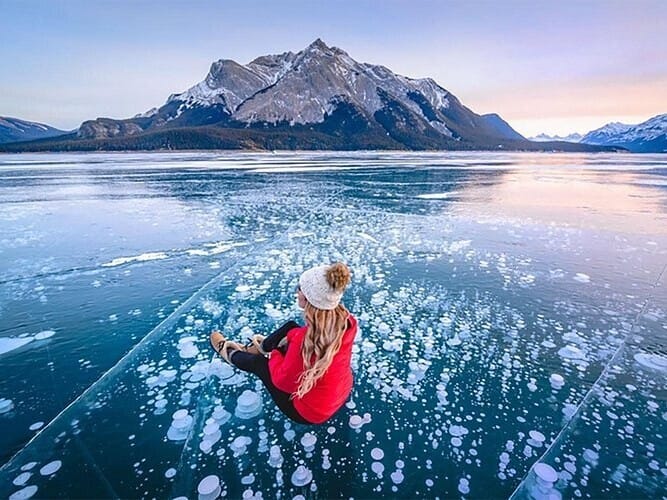 |
Stay Informed and Check Conditions Before You Go
If you're planning any winter adventures in the Bow Valley, staying informed is your best safety tool. The avalanche bulletin from Avalanche Canada is updated regularly and includes hazard maps, weather data, and expert analysis of the snowpack. You can view the forecast at www.avalanche.ca/map.
Also keep an eye on local weather reports from Environment Canada and updates from Parks Canada's Visitor Safety team, especially when snow or wind is in the forecast. Winter in the Rockies is dynamic, and conditions can change rapidly.
Know Before You Go - And Know When Not To Go
We’re all about helping people connect with the mountains, but that connection has to include respect for nature’s raw power. Right now, the best way to enjoy the mountains might be from the valley floor, or by spending the day snowshoeing through forest trails, enjoying Canmore’s local cafes, or taking in a scenic drive. There’s no shame in playing it safe.
Avalanche safety is not just about personal risk - it also affects rescuers, other visitors, and the environment. Making conservative choices now helps ensure everyone can enjoy these wild places for seasons to come. This might be the perfect time to take a scenic sleigh ride, enjoy a tubing adventure at a nearby hill, or explore Banff’s vibrant food and drink scene instead of heading into high-risk terrain.